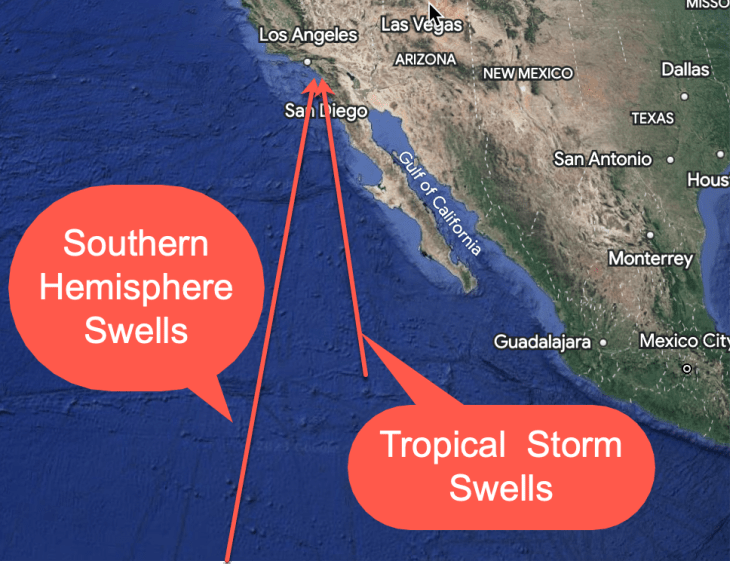
It is winter in the Southern hemisphere and a massive ocean storm is sending long interval rolling swells northward for their 6,000-mile journey to our San Clemente shores. Off the coast of Mexico, warm humid air rises over the tropical waters, spinning up hurricane force winds making for large, short interval swells that track into our “swell window.” In San Clemente we call this… summer. But with these fantastic summer swells come hazardous conditions. (Drone Photo Credits; Josh Sherreitt, Marine Safety Lifeguard)
The History and Anatomy of San Clemente’s Rip Currents
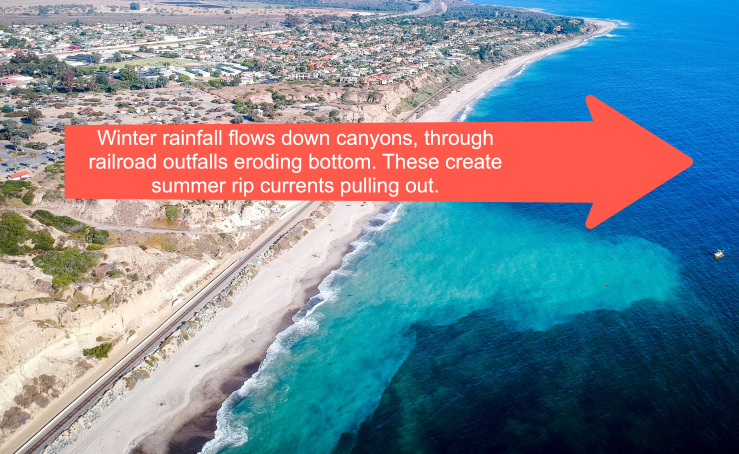
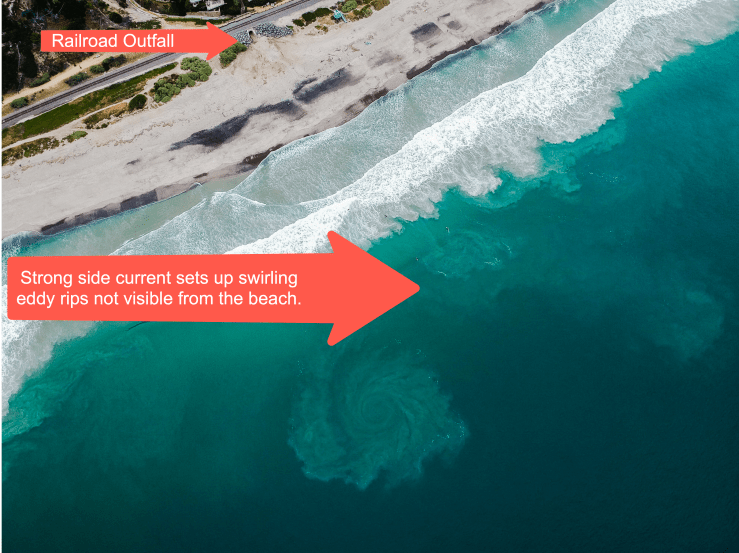
In 1888 Santa Fe railroad had a problem. How to lay rails around Cotton’s Point (Southern end of San Clemente) along the coast to Dana Point. In San Clemente, the rolling hills are cut with deep ravines that end in bluffs at the sand. That means Santa Fe had to build channels under the tracks to allow water to reach the sand. This was good for drainage, but not good for safety. You see, these outfalls create low spots in the sand that extend out into the ocean, some as far as 100 yards or more. As the water from waves washes onto the beach, it seeks out these low spots and rushes back out to sea, creating dangerous rip currents.
Add a Strong Lateral Current and the Pier, and You Have Real Trouble
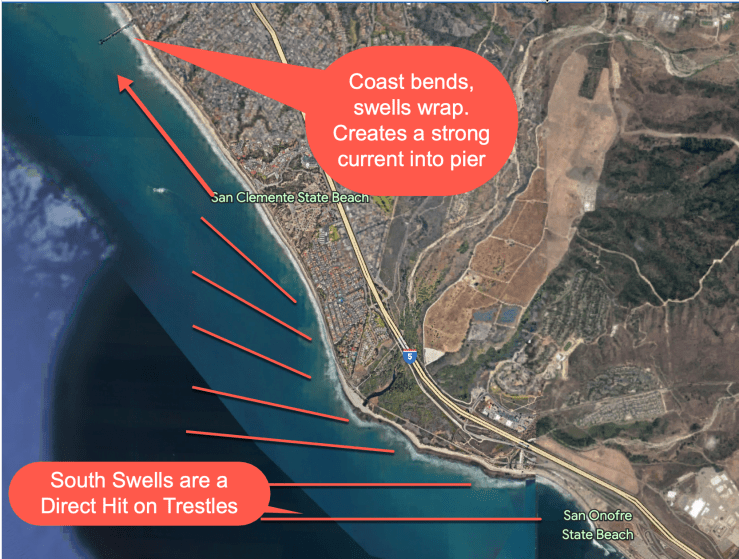
Not only do we have dangerous rip currents, we also have a strong lateral or “sideways” current running from south to north. As the swells wrap around Cotton’s point at the southern end of San Clemente, the coast takes a dramatic bend and faces west. This results in a fierce current running from south to north. This is especially dangerous if you find yourself caught in the current and headed for the concrete, mussel-encrusted pier.
Our Lifeguards to the Rescue
Making more than 2,000 rescues per year and with an enviable record of no drownings on a lifeguarded beach in more than 45 years, the men and women of the San Clemente Lifeguard Department are highly trained to recognize and respond to swimmers facing these hazards.

Preventing Trouble is the Key
Our lifeguards are trained to spot trouble before it happens. They know where the rip currents are and let swimmers know to stay away from those areas. They also keep swimmers away from the pier. Our Junior Lifeguards are taught from day-one how to recognize rip currents, side currents and other hazardous conditions. With more than 900 participants each summer, the Junior Lifeguard program is a key aspect of keeping our beaches safe.
 San Clemente Lifeguard and Junior Guard Foundation